The momentum behind the push for term limits in American politics continues to gain strength. In each of the fifteen states where referenda on term limits for Congressmen have been held, voters have approved the measures with an average of over 66 percent in favor. Furthermore, between four to ten more states are set to allow their citizens to vote on congressional term limits in the upcoming November elections, and these proposals are expected to pass with ease. In addition to these state-level initiatives, eighteen states and numerous cities and counties across the country have already adopted term limits for state and local officials.
This significant public support signals a widespread discontent with careerism in politics. Many believe that a continuous infusion of fresh perspectives into the federal legislature would benefit both Congress and the nation as a whole. It’s worth noting that support for term limits spans across diverse demographic groups, with polls consistently showing majorities among men, women, blacks, whites, Republicans, Democrats, and Independents, typically exceeding 80 percent in favor (based on a Nation Survey Conducted January 23rd, 2023 by McLaughlin and Associates).
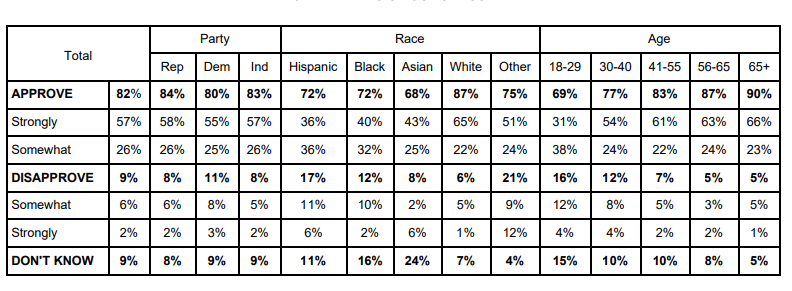
Notably, individuals from various political backgrounds, including figures like Ed Koch, Doug Wilder, Ralph Nader, Paul Tsongas, and George Will, have expressed their support for term limits. Over 100 Members of Congress have signed a discharge petition to force a vote in the House of Representatives on a constitutional amendment to establish term limits. Even prominent figures like Ross Perot and numerous United We Stand America chapters have made term limits a central goal. The fact that the United States Supreme Court has accepted a state case for review regarding term limits demonstrates the importance of this issue on the American political landscape.
The term limits movement has proven its political influence through the outcomes of state referenda, state legislative actions, and candidate election results.
The call for term limits represents a substantial shift in American political sentiment. Polls consistently show that Congress ranks near the bottom when Americans are asked about their respect for major institutions. The widespread support for term limits indicates that people are looking to this policy as a solution to issues in Congress, and they are unlikely to be swayed from this stance. In fact, when pollsters presented four leading arguments against term limits after initially polling subjects on the issue, support for term limits actually increased from 71 percent to 74 percent.
Skepticism about long-term political careers has deep roots in American history. Term limits were originally included in America’s first governing document, the Articles of Confederation, and they were only omitted from the Constitution because the drafters deemed them too detailed for the document’s length. Several past Presidents, including Truman and Eisenhower, supported congressional term limits. Since the 1951 amendment that limited Presidents to two terms, many political scientists have argued that congressional term limits could restore balance between the legislative and executive branches of the federal government.
The term limits movement gained statewide success in September 1990 when Oklahoma initiated term limits for its state legislators. Two months later, Colorado became the first state to implement term limits for its congressional delegation. California also played a pivotal role in laying the groundwork for the victories in 1992 when it established term limits for state legislators. In that same year, fourteen more states passed term limit referenda alongside the election of a new President. Term limits received more votes in these fourteen states than Bill Clinton and Ross Perot combined. This wave of support extended to cities and counties across the country, including major metropolises like Los Angeles and New York City.
Despite efforts by opponents to create movements against term limits, they have struggled due to the widespread popularity of term limits among the public. The term limits movement in the 1990s could be compared to the tax revolt of the 1970s – a populist movement that politicians cannot afford to ignore. While many state legislatures have grappled with term limits, only Utah has successfully passed a bill to date, and there are ongoing state referendum drives to strengthen the measure there. In several cases, state legislatures have employed various maneuvers to circumvent term limits, revealing the resistance to change within incumbent political circles.
The resistance from elected officials and special-interest groups, particularly labor unions, is primarily because the arguments against term limits do not resonate with the public. Those opposing term limits face an uphill battle in swaying public opinion.
Term limits continue to gain traction on multiple political fronts, including candidate elections, state referenda, state and federal legislative actions, and even congressional and presidential politics.
The support for term limits reflects a broader dissatisfaction with the state of Congress. By bringing in new perspectives, mandating regular turnover, and reducing incentives for wasteful election-related federal spending, term limits are seen as a vital political reform.
Term limits are constitutional when enacted at the state level as a legitimate exercise of states’ power to regulate their own elections.
Common Arguments Against Term Limits
Argument #1: Limiting Voter Choices
Opponents often claim that term limits restrict voters’ choices and that elections already serve as term limits. However, this argument overlooks the significant advantages enjoyed by incumbents and the potential for term limits to expand candidate choices. Incumbents benefit from taxpayer-funded resources like franking privileges, staff, and campaign funds, making it challenging for challengers to compete. Moreover, political donors tend to favor incumbents, reinforcing their advantage.
Term limits could enhance democracy by increasing candidate filings and encouraging political advancement opportunities. For example, in California and Maine, where state-level term limits were imposed, there was a surge in candidate filings, offering voters more choices.
Argument #2: High Congressional Turnover
While opponents may point to recent turnover in Congress, much of it results from incumbents seeking other offices or resigning, rather than electoral challenges. The seniority system allows long-term incumbents to maintain control and shape the legislative agenda, even with occasional new members. Term limits would disrupt this system and promote a more competitive environment.
Argument #3: Disadvantage for Smaller States
Some argue that term limits could harm smaller states by depriving them of experienced legislators. This argument implies that smaller states rely on long-serving incumbents to accumulate seniority-based power. However, term limits would dismantle the seniority system, shifting power to those with merit and a commitment to responsible governance. Smaller states would still have opportunities to influence federal policy based on sound principles, rather than seniority-based politics.
Argument #4: Loss of Experienced Legislators
Opponents contend that term limits would exclude experienced legislators and require lengthy on-the-job training. However, two years in office can provide ample experience, and other professions don’t demand such extended training periods. Term-limited legislators can apply their skills and experience in various fields outside of Congress. Additionally, fresh perspectives brought by new legislators may lead to innovative solutions, challenging the notion that years of experience are indispensable for effective governance. Ultimately, sacrificing some experienced legislators may be a worthwhile trade-off to eliminate long-serving timeservers who have become complacent and cynical.
To wrap things up – the term limits movement in American politics is a powerful force with growing public support. The call for term limits is rooted in the desire for fresh perspectives, increased accountability, and a more dynamic political landscape. While opposition exists primarily among incumbent politicians and their associated special-interest groups, the widespread popularity of term limits continues to drive this movement forward. Term limits are viewed as a means to address the issues of careerism in politics, restore a sense of citizen governance, and promote a more accountable and effective Congress.
 The Porcelain Post
Leave a comment